Lessons from The Grenfell Public Inquiry: Strengthening Professional Competence Across BB7
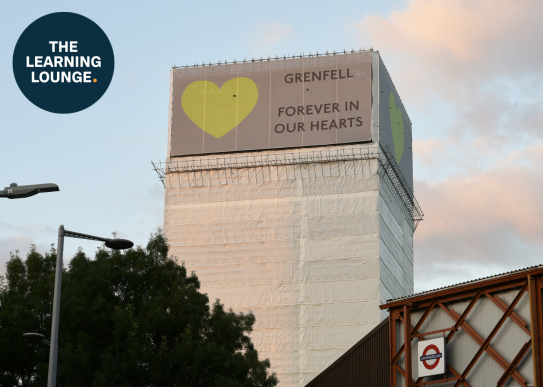
The Grenfell Tower tragedy marked a defining moment for the built environment industry, prompting widespread reflection on how buildings are designed, constructed, managed and maintained. Whilst much of the discussion that followed focused on regulations, compliance and technical failings, the Grenfell Tower Public Inquiry also highlighted something equally important: many of the issues identified were not purely technical in nature.
Communication breakdowns, unchecked assumptions, inadequate record-keeping, poor coordination and failures in professional judgement emerged as recurring themes throughout the Inquiry. These are challenges that can affect any project, regardless of scale, sector or discipline, and they serve as an important reminder that building safety depends on more than technical knowledge alone.
At BB7, we believe that the lessons from Grenfell should not simply be acknowledged; they should be actively explored, challenged and embedded into everyday professional practice.
Exploring the Professional Lessons of Grenfell
Through our Learning Lounge initiative, we create opportunities for colleagues to continuously develop their knowledge, share experiences and learn from one another. As part of this commitment, we have engaged BB7’s Chartered Fire Engineering sub-consultant Hadrien Fruton to deliver an interactive internal CPD series exploring the professional lessons emerging from the Grenfell Tower Public Inquiry.
Hadrien brings a unique perspective to the programme, having spent several months supporting work associated with the Public Inquiry during his time at Arup. Reviewing evidence, correspondence, meeting records, reports and organisational structures provided a first-hand insight into the decisions, behaviours and missed opportunities that ultimately contributed to the systemic failures identified throughout the Inquiry.
Now underway, the programme spans 22 sessions covering 47 individual topics, examining everything from communication, assumptions and quality assurance through to project management, report writing, record-keeping and professional accountability. Rather than focusing solely on technical fire engineering, the series explores the broader professional behaviours and decision-making processes that influence project outcomes and ultimately contribute to safer buildings.
Looking Beyond Technical Competence
The intention of the programme is not to revisit the Inquiry for its own sake, but to make its lessons more accessible and relevant to everyday practice within the business.
Whilst most people working within the built environment will be familiar with Grenfell, far fewer have had the opportunity to follow the Inquiry in detail, review the evidence presented or watch the many hours of witness testimony. The CPD programme distils those findings into practical learning outcomes that engineers and consultants can apply to their own projects and professional responsibilities.
As Hadrien explains:
“I did the heavy lifting, so that everyone else only needs to focus on the learning outcomes: proactivity, more communication, no assumptions, increased quality, accountability, among others. Our job is not a hobby. It has a real impact on lives.”
This broader perspective has become a recurring theme throughout the programme. Whilst formal education provides engineers with technical foundations, many of the skills that define successful consultants are developed throughout their careers. Communication, professional judgement, report writing, stakeholder management, ethics, accountability and proactive decision-making all play a vital role in delivering successful projects, yet they are often the skills that receive the least attention.
Many of the topics explored throughout the series may seem routine at first glance. Sending an email. Writing a report. Recording project decisions. Reviewing information provided by others. However, the Inquiry repeatedly demonstrated how seemingly small actions and decisions can have significant consequences when assumptions go unchallenged, or communication breaks down.
Challenging Assumptions
One of the strongest themes explored so far has been the role assumptions play within projects.
The series examines assumptions relating to existing compliance, compartmentation, fire safety measures, maintenance and building information, encouraging participants to challenge what they know, what they’re being told, what they believe and what they can evidence.
Rather than viewing assumptions as accepted facts, the programme encourages a more rigorous approach to verification and critical thinking.
As Hadrien puts it:
“I am not saying that assumptions are avoidable, because they are not. But why not see them instead as hypotheses? And hypotheses are always tested to either be confirmed or disproved.”
This mindset is particularly relevant when working with existing buildings, incomplete information and complex stakeholder environments, where uncertainty often exists.
The programme also reinforces the importance of seeking clarity when information is unclear, rather than relying on interpretation or assumption.
“If we are the ones not understanding something, we need to ask, not assume. Find the exact answer. Ask questions until you can explain it back to someone else in your own words.”
Communication as a Safety-Critical Skill
The same principle extends to communication.
Whether through emails, reports, meetings or client discussions, communication influences how information is interpreted, understood and acted upon. The Inquiry highlighted numerous examples in which misunderstandings, unclear messaging, or assumptions about shared understanding contributed to poor outcomes.
For this reason, several sessions focus specifically on professional communication, report writing, and the importance of ensuring that advice is communicated clearly, accurately, and appropriately.
As Hadrien notes:
“Communication is not simply about saying what you need to say. It is the art of being understood.”
For engineers and consultants, effective communication is not simply a professional skill; it is a critical component of risk management and project delivery.
Learning Through Discussion
Whilst the content itself has generated valuable discussion, one of the programme’s greatest strengths has been its collaborative format.
Rather than presenting predetermined conclusions, each session encourages participants to develop their own learning outcomes and share them with colleagues. Following each topic, participants break out into smaller groups to discuss their thoughts, experiences and reactions before returning to the wider session to share their key observations and learning outcomes. This creates opportunities for engineers from different disciplines, project backgrounds and experience levels to learn from one another and contribute perspectives that may not otherwise have been considered.
As Hadrien explains:
“I am not telling you what to think. You create your own learning outcomes and share them with the rest of the group. Because my learning outcomes are different from yours, as we do not have the same experience, have not encountered the same issues, and do not see life through the same prism.”
This approach transforms the sessions from traditional CPD into a shared learning experience, where participants learn not only from the Inquiry itself, but from the collective experience of colleagues across the business.
The format also creates an environment where engineers can openly discuss their reactions, challenge ideas and learn from one another in a low-pressure setting.
“I genuinely believe this is the greatest strength of the format: being able to discuss things in a low-pressure setting, share your thoughts and reactions, talk about what you’ve seen, or even comment on the Public Inquiry itself.”
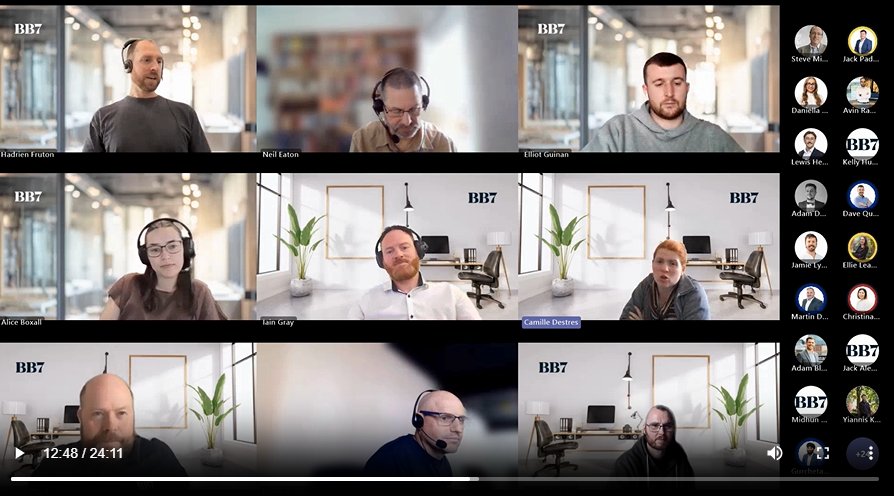
Feedback across the business has been overwhelmingly positive, with colleagues highlighting the value of discussing real scenarios and exploring lessons that apply not only to fire engineering, but to professional practice more broadly.
Turning Lessons into Better Practice
The Grenfell Tower Public Inquiry has provided the industry with difficult but essential lessons. Whilst those lessons can never undo the events that occurred, they provide an opportunity for individuals and organisations to reflect on how they work, communicate and make decisions.
For BB7, this CPD programme is about more than revisiting the findings of the Inquiry. It is about creating better engineers, consultants and professionals by continually strengthening the judgement, behaviours and competencies that underpin safer outcomes. Through ongoing learning, open discussion and a commitment to continuous improvement, we can help ensure the lessons of Grenfell continue to shape the future of our industry for the better.
We would like to thank Hadrien Fruton for the considerable time and effort invested in developing and delivering this interactive CPD programme. The openness, discussion and engagement generated across the business is a testament to both the quality of the content and the collaborative format he has created. As the series continues, we look forward to exploring the remaining topics together and ensuring that the lessons of the Grenfell Public Inquiry continue to inform and strengthen the way we work at BB7.