7 Questions with Jason Danks
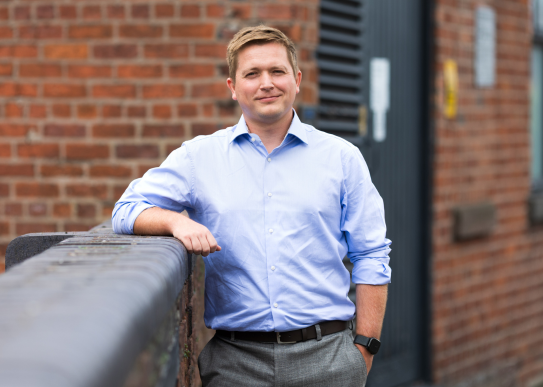
Welcome to 7 Questions with BB7, our interview series that celebrates the inspiring individuals behind the business. Each edition gives you the chance to get to know the people who make BB7 what it is, as they share their career journeys, perspectives, and insights.
In this edition, I caught up with Jason Danks, a Senior Façade Consultant at BB7, to hear more about his unique journey into the industry, what life as a façade engineer really looks like, and the projects and challenges that keep the role so rewarding.
1. What first sparked your interest in the façade industry, and how did your career journey lead you to BB7?
I definitely didn’t take the traditional route into façade engineering.
Before university, I served in the Army as an Electrical and Mechanical Engineer with REME, which gave me a really solid foundation in problem-solving, discipline and working under pressure. After leaving the Army, I went on to study Mechanical Engineering at the University of Hull.
While I was studying, I worked in maintenance, but I quickly realised it wasn’t a field I wanted to pursue as a long-term career. I then made a sideways move into a local windows, doors and curtain wall fabricator, and that’s where I was first introduced to the façade industry.
Within a few weeks, I realised just how varied the role was, and that’s what really hooked me. No two days were ever the same. One day I’d be looking at acoustics, the next carrying out structural checks, wind load calculations supported by Computational Fluid Dynamics analysis, or working on 1D, 2D and 3D thermal assessments. It was a great mix of engineering, problem-solving and constantly learning something new.
I was actually very happy in my previous role, so when a recruiter first approached me about BB7, I wasn’t actively looking to move. But after meeting Iain and Camille and hearing more about the projects, opportunities and potential for growth at BB7, it quickly became a no-brainer. The rest is history.
2. What does a typical day look like for you as a Senior Façade Consultant?
One of the things I enjoy most about façade engineering is that there isn’t really a “typical” day, which keeps the role interesting.
A normal day can involve reviewing design information, carrying out thermal analysis, completing structural checks, writing reports, meeting with clients, or visiting site to inspect installation works. It’s a real mix of technical problem-solving, collaboration, and making sure designs work both on paper and in reality.
I work fully remotely, which gives me a lot of flexibility, but I’m still regularly visiting our project sites every two to three weeks to stay closely connected to what’s happening on site. I think that balance works really well because it gives you the focused time needed for technical work while still staying connected to what’s happening on site.
3. Can you share a project you are working on at the minute?
At the moment, I’m working on a remediation project in Jersey with Radisson Blu where BB7 has been appointed full design responsibility across disciplines, which has been a really interesting experience and adds another layer to the role.
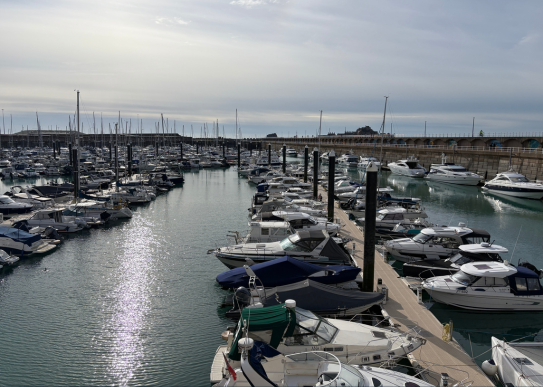
I’m working closely with Camille, Director of Safer Buildings Design, as well as BB7’s Fire Engineering team, to make sure effective solutions are developed quickly and installed correctly on site. The project involves several different façade systems, so there’s been a lot of coordination needed to ensure the solutions are both compliant and practical to deliver.
Adding to that, the building has remained fully operational throughout the works, which means careful planning, communication and collaboration have been essential at every stage.
It’s definitely been one of those projects that highlights how important teamwork, problem-solving and attention to detail are in façade engineering.
4. What’s something people outside the industry often misunderstand about façade engineering?
I think one of the biggest misconceptions is that people see the façade as just the exterior “skin” of a building and assume it’s mainly about aesthetics.
In reality, façade engineering is incredibly technical and plays a huge role in how a building performs. We’re constantly balancing structural performance, thermal efficiency, fire safety, acoustics, weather resistance, buildability, and architectural intent — often trying to optimise all of them at the same time.
A lot of people are surprised by the level of engineering involved behind what can appear to be a simple glass façade or cladding system. There’s a huge amount of analysis, coordination and problem-solving involved in making sure it performs exactly as intended.
5. What changes or trends are you currently seeing in the façade industry?
One of the biggest trends I’m seeing in the façade industry is the continued focus on building safety.
I joined the industry after the Grenfell Tower fire, so the increased scrutiny around façade performance and compliance has always been part of my experience. That said, I’m currently working on several remediation projects, which has given me real insight into what was previously considered acceptable and just how much standards and expectations have evolved.
There’s now a far greater focus on fire performance, material selection, compliance and ensuring systems are installed exactly as intended. It’s also driving much closer collaboration among façade engineers, fire engineers, contractors, and clients to ensure issues are identified and resolved as early as possible.
6. What makes BB7 different from other places you’ve worked?
What really makes BB7 stand out to me is how seriously they take continuous learning and professional development.
From day one, it was clear that development here isn’t just something that gets talked about – it’s actively encouraged and supported. We have weekly CPD sessions through the Learning Lounge, which gives everyone the opportunity to expand their technical and commercial knowledge, while learning from colleagues across our different disciplines.
BB7 is also sponsoring my chartership journey and will fully fund my Master’s degree next year, which shows a real commitment to helping people grow and progress over the long term.
There’s also a really strong culture of knowledge sharing across the business, especially when working alongside teams like fire engineering and safer buildings. It gives you exposure to a much broader range of expertise and ways of thinking.
7. What advice would you give to someone looking to build a career in façade engineering?
My biggest piece of advice would be to stay curious.
Façade engineering is such a broad industry, and no two projects are ever the same, so being willing to keep learning is really important. Don’t be afraid to get involved in projects or disciplines outside your normal day-to-day responsibilities, as that’s often where you learn the most and develop the broadest understanding of building performance.
Some of the biggest learning opportunities in my career have come from stepping into projects that challenged me or exposed me to areas I hadn’t worked in before, particularly when collaborating with different teams and disciplines.
And finally, find a company that genuinely supports your development. Having access to opportunities, training, and people who want to help you grow can make a huge difference – and that’s something I’ve definitely found at BB7.
A huge thank you to Jason for taking the time to share his experiences and provide an insight into both the technical and collaborative side of façade engineering. It was great to hear more about his unique journey into the industry, the variety of projects he’s involved in, and the passion he brings to every part of his role at BB7.